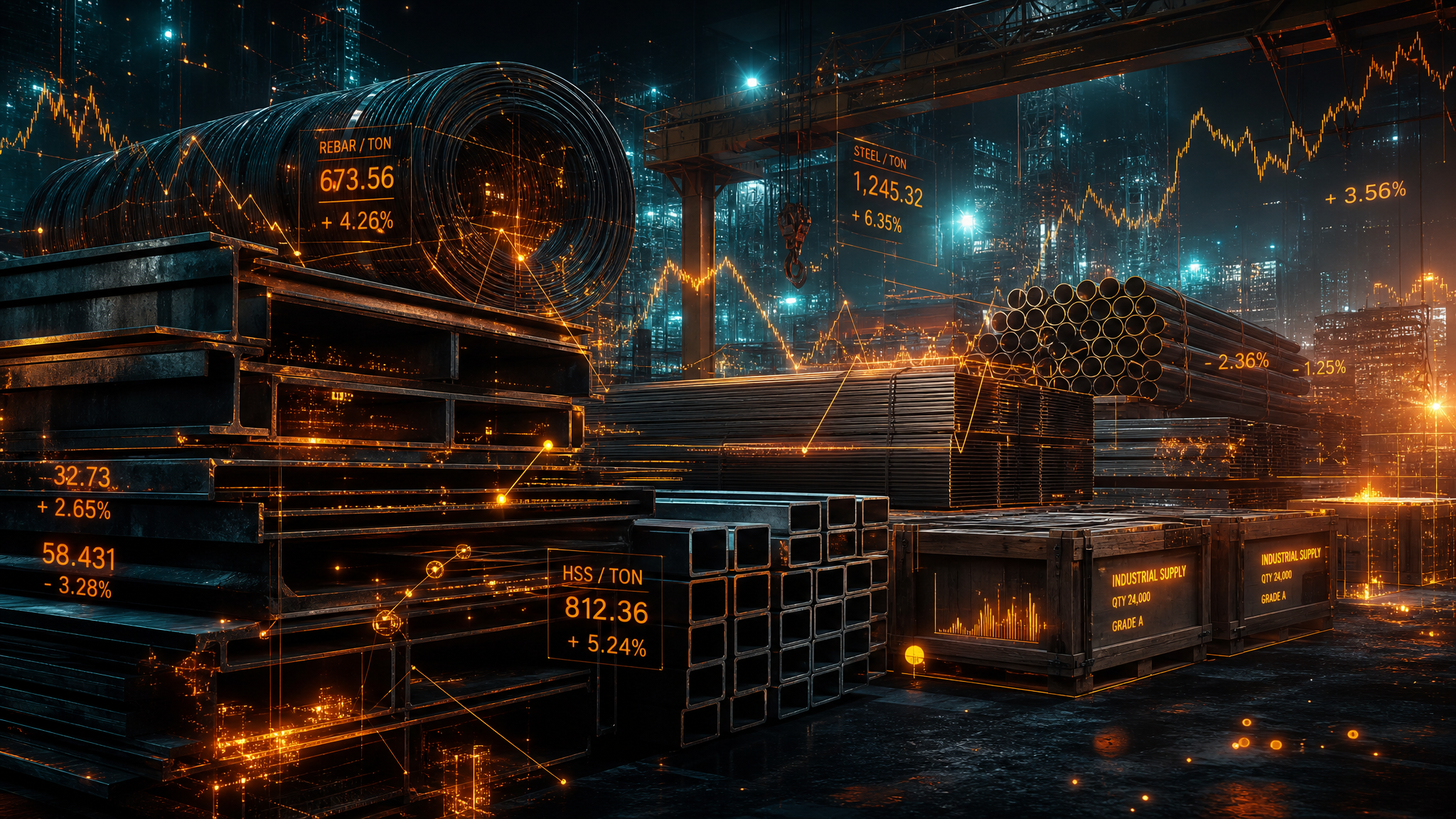
For most of the postwar era, a tradesperson could quote a job on Monday, buy the materials three weeks later, and expect the price to be roughly what they assumed. That assumption is dead. Supply shocks, shifting tariffs, energy-linked input costs, and volatile demand have made the price of physical materials genuinely unstable. For the Ground tribe, this quietly rewrites the economics of every fixed-price quote.
The hidden risk transfer
A fixed-price quote issued before materials are purchased is, in financial terms, a short position on input prices. If costs rise between quote and purchase, the tradesperson eats the difference. In a stable-price world that risk was negligible and could be ignored. In a volatile-price world it is a recurring, margin-destroying tax that most operators are absorbing without even naming it.
A fixed-price quote issued before materials are purchased is, in financial terms, a short position on input prices.
How the market-aware operators price
The tradespeople protecting their margin have borrowed three techniques from industries that always lived with volatile inputs. Price validity windows: quotes now expire in days, not weeks, transferring stale-price risk back where it belongs. Material pass-through clauses: the labour is fixed but the material cost is quoted at cost-plus, so input swings flow to the customer transparently. Pre-purchase for locked jobs: once a job is confirmed, materials are bought immediately to freeze the cost rather than holding an open exposure.
The conversation that has to change
Every trade business is running a small commodities book, whether it acknowledges it or not.
The instinct is to fear that itemising material volatility will lose jobs to competitors still quoting fixed. In practice, customers understand volatile prices — they experience them everywhere else — and a transparent explanation reads as professionalism, not excuse-making. The operators losing are the ones quietly absorbing the swings and wondering why a busy quarter produced no profit.
The steward's lens on the trade
Every trade business is, whether it acknowledges it or not, running a small commodities book. The ones that survive volatile input markets are those that manage that exposure deliberately — pricing the risk, hedging where possible, and never again quoting as though the cost of steel or timber or copper will sit still.