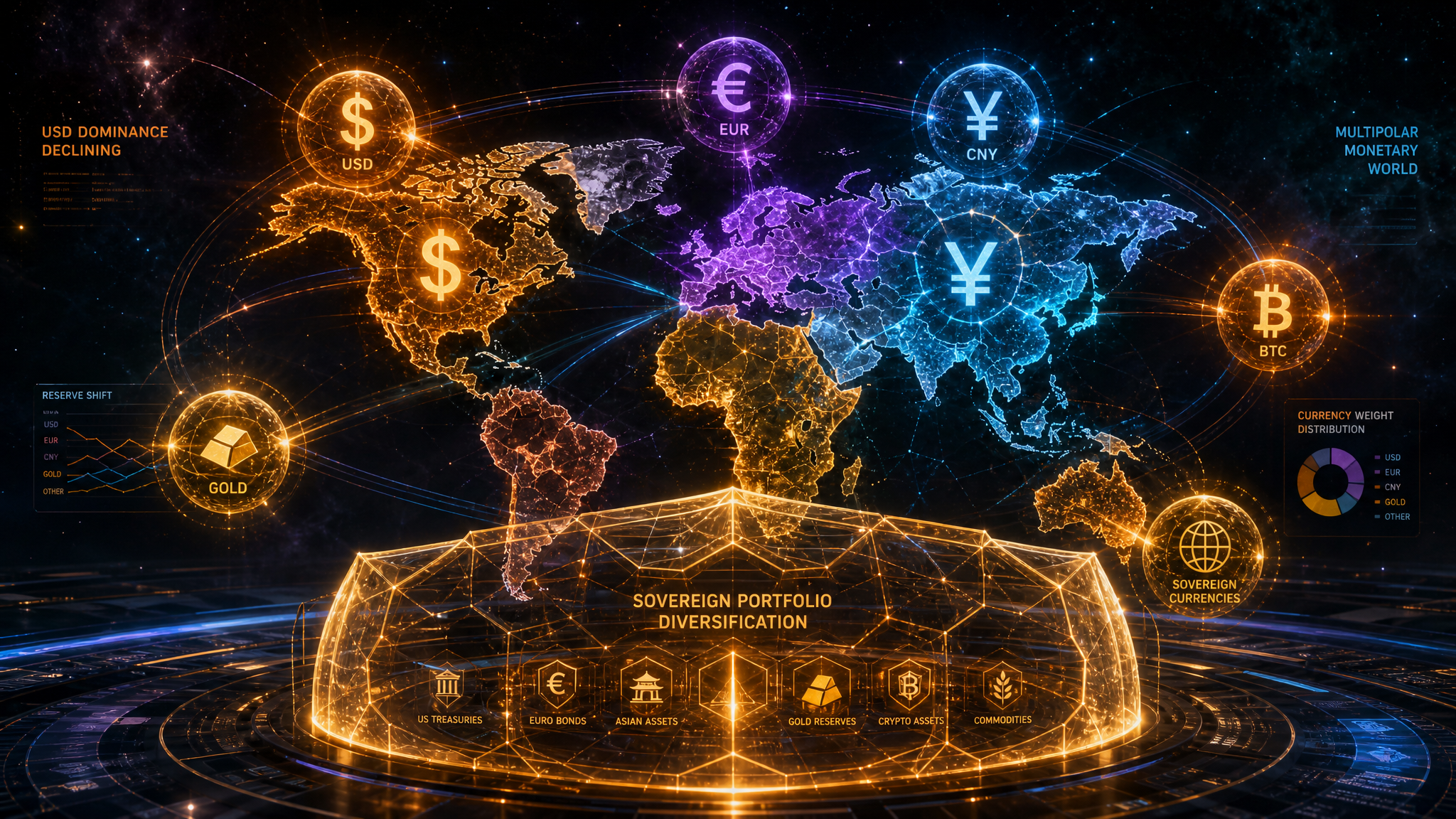
De-dollarization is one of the most misread themes in macro. The maximalist claim — that the dollar is about to lose reserve status — is not supported by the data: the dollar's share of reserves, trade invoicing, and cross-border funding remains overwhelming. But the dismissive counter-claim — that nothing is changing — misses a slower and more consequential shift. The plumbing around the dollar is fragmenting, and that is the risk stewards should actually price.
Separate the currency from the rails
The dollar's dominance rests on two things: its role as a store of value and unit of account, and the settlement rails through which most global transactions clear. The first is sticky and hard to displace. The second is more contestable — and it is where change is happening. Alternative cross-border messaging and settlement systems, bilateral local-currency trade arrangements, and regional payment linkages are proliferating. None displaces the dollar; each adds a parallel rail.
The plumbing around the dollar is fragmenting — and that is the risk stewards should actually price.
The three signals worth tracking
Central-bank gold accumulation. Official-sector gold buying has run at elevated levels for several years — a revealed preference for a reserve asset that carries no counterparty and no sanction risk. That is not a bet against the dollar as money; it is a hedge against the dollar as a controllable rail.
Bilateral and regional currency arrangements. A growing share of trade between non-US partners is being invoiced and settled outside the dollar. Individually marginal, collectively they build muscle and infrastructure for a more multipolar settlement world.
Sanctions as a catalyst. Each high-profile use of financial infrastructure as an instrument of policy strengthens the incentive for other states to build alternatives. The risk is not ideological; it is practical diversification by parties who do not want a single chokepoint over their reserves.
In a multipolar money world, resilience comes from optionality across rails, not a directional bet on which currency wins.
The threat, correctly framed
For a steward, the risk is not waking up to a dollar collapse. It is a world where moving capital across blocs becomes slower, costlier, and more politically contingent — where the frictionless dollar system fragments into partially-connected regional systems. That raises transaction costs, complicates hedging, and increases the value of assets and rails that are neutral to any single bloc.
The hedge
The prudent response is neither dollar-abandonment nor complacency. It is rail diversification: holding a portion of reserves in bloc-neutral assets (gold being the obvious example), maintaining operational relationships across more than one settlement system, and stress-testing the portfolio not for a dollar crash but for a scenario where a given rail becomes unavailable or expensive. In a multipolar money world, resilience comes from optionality across rails — not from a directional bet on which currency wins.